


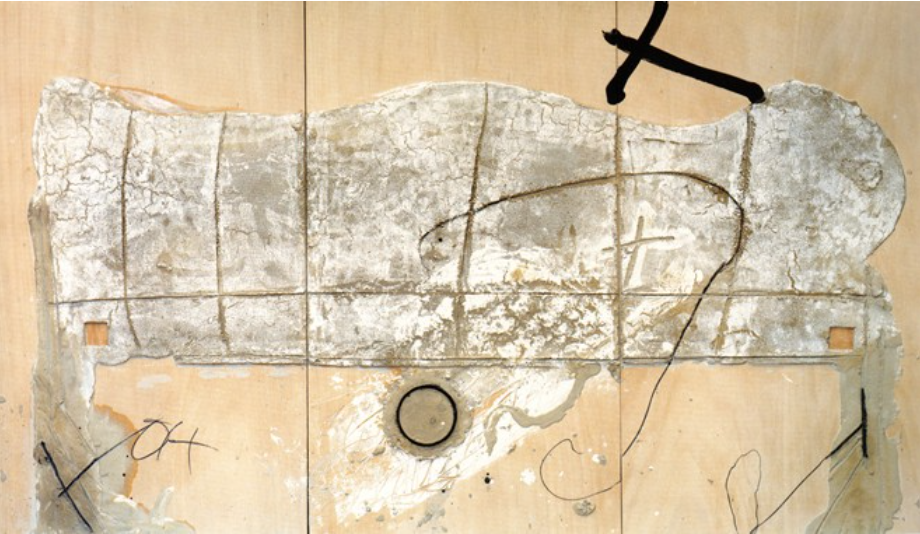
Work by Antoni Tàpies
The work of Antoni Tàpies, one of the most influential Spanish artists of the 20th century, has left a lasting mark on the world of contemporary art. Throughout his career, Tàpies explored new forms of expression and challenged established artistic conventions. This article will examine the life and legacy of Antoni Tàpies, highlighting some of his most famous works and delving into the recurring themes found in his art.
Biography of Antoni Tàpies
Early years and training
Antoni Tàpies was born on December 13, 1923, in Barcelona, Spain. Coming from a well-to-do family, he showed an interest in art from a young age. At seventeen, Tàpies was diagnosed with a lung disease that forced him to spend long periods of time in bed. During this time, he began to explore his creativity and developed a passion for drawing and painting.
After completing his secondary education, Tàpies decided to pursue his love of art and enrolled at the Barcelona School of Fine Arts. There, he was influenced by modern art and the avant-garde movements that were emerging in Europe.
The art of Tàpies
Influences and artistic style
Antoni Tàpies' work was influenced by a variety of sources, from abstract art to surrealism and expressionism. His unique artistic style is characterized by the incorporation of unconventional materials and the exploration of texture and form.
Antoni Tàpies' work was inspired by Eastern philosophy, symbolism, and the artistic heritage of his country. Through his art, he sought to convey a profound reflection on the human condition and existence. His works are characterized by the presence of enigmatic symbols and signs, which invite the viewer to question and explore new interpretations.
Recurring themes in his work
The transcendence of the everyday
One of the recurring themes in Antoni Tàpies' work is the transcendence of the everyday. Through his art, he explored the beauty and meaning found in common objects and materials. He used elements such as chairs, doors, and windows to represent the human experience and our connection to the mundane.
The power of matter and texture
Tàpies experimented with a variety of materials in his art, such as sand, cement, wire, and fabric. These elements allowed him to create textures and layers in his works, adding depth and a tactile quality to his creations. Materiality became a means of expressing the physical presence and energy of his pieces.
Spirituality and the transcendental
Spirituality was another important theme in the work of Antoni Tàpies. Through symbols and abstract elements, he explored the spiritual dimension of human existence. His works reflect a search for the transcendental, inviting the viewer to reflect on philosophical and metaphysical questions.
Recognition and legacy
Throughout his career, Antoni Tàpies received numerous accolades and awards for his contribution to the art world. His works were exhibited in major galleries and museums worldwide, and his influence extended to a generation of subsequent artists.
Tàpies' legacy endures to this day. His innovative techniques and his focus on exploring the material and the spiritual continue to inspire artists and captivate art lovers worldwide.
Works by Antoni Tàpies
«"Great gray painting"»
One of Antoni Tàpies' most emblematic works is "Large Grey Painting." Created in 1957, this piece exemplifies his characteristic style with its combination of textured materials and grey tones. The painting evokes a sense of mystery and depth, inviting the viewer to delve into its complexity.
«"The chair"»
«"The Chair" is another significant work in Antoni Tàpies' oeuvre. Created in 1961, this piece depicts a realistic chair but incorporates abstract and textured elements. Through this work, Tàpies sought to convey a sense of human presence and connection to everyday objects.
«"Paint by numbers"»
In "Painting with Numbers," Tàpies combines geometric elements with numbers and symbols. This work, created in 1971, represents his interest in exploring spirituality and transcendence through abstract and enigmatic forms.
«"Writing and Disfigurement"»
Antoni Tàpies's work "Writing and Disfigurement" uses writing as a central element. Through his abstract style and the application of textured materials, Tàpies explores the relationship between the written word and its meaning.
Conclusions
The work of Antoni Tàpies is an unparalleled testament to his informalism, creativity, and contribution to the art world. Throughout his career, Tàpies challenged artistic conventions and explored new forms of expression. His unique style, incorporating unconventional materials and experimentation with textures, has left a lasting mark on contemporary art.
Through themes such as the transcendence of the everyday, the power of matter and texture, and spirituality, Tàpies invited viewers to reflect on the human condition and explore new interpretations. His works continue to captivate and challenge those who contemplate them.
Antoni Tàpies' legacy transcends his lifetime, and his influence extends to later artists. His entire body of work is exhibited in major galleries and museums, and his impact on the art world endures to this day.