


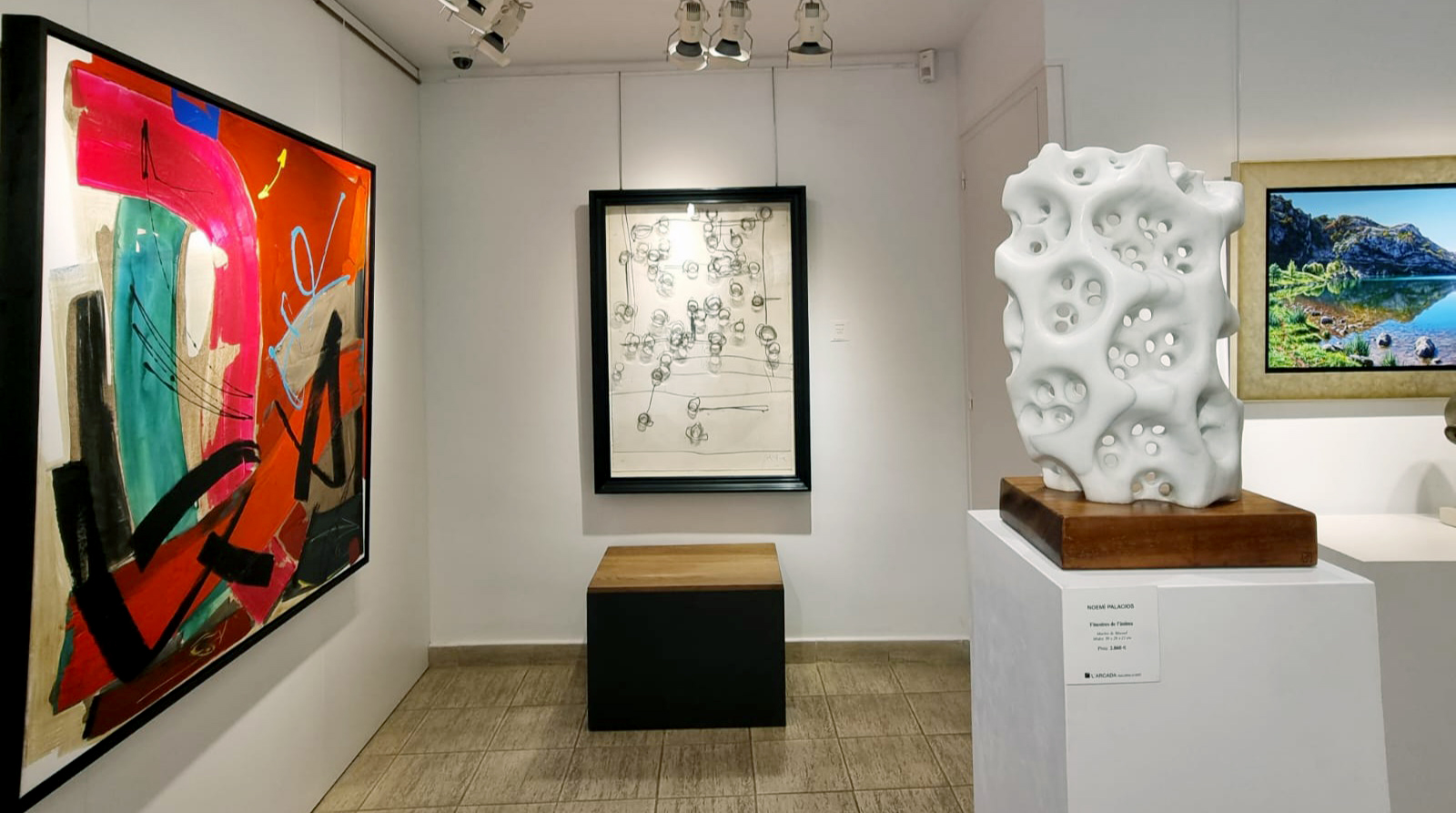
What is Contemporary Art? Essential Guide
What is contemporary art?
If you've ever asked yourself this question when faced with a work made with lights, recycled materials, or abstract forms, you're not alone. Many people, even art lovers, feel confused when confronted with an installation without a recognizable figure, a painting with only one color, or a performance that seems more like theater than painting. This article is an introductory guide, designed especially for students, curious individuals, and gallery visitors who want to begin understanding contemporary art without technical jargon or preconceived notions. We'll explore its definition, characteristics, origins, and why it's one of the freest and most interesting expressions in the current art scene.
What does "contemporary art" mean?
Contemporary art is the art of our time. It encompasses all artistic expressions produced from the mid-20th century to the present. Unlike other more narrowly defined movements, such as Impressionism or Surrealism, contemporary art does not adhere to a single style, technique, or movement. It is a living category, constantly evolving, and its main characteristic is its dialogue with the present: with social issues, politics, the environment, identity, technology, and everyday life.
 How did contemporary art emerge?
After World War II, many artists began to question traditional art models. The result was the emergence of new forms of expression that broke with established norms. Art shifted from modernism (which sought innovation in formal languages such as color, form, and composition) to an art that focused more on the idea than on technique. This gave rise to conceptual art, performance art, installation art, and other hybrid disciplines that are now part of the contemporary repertoire.
Characteristics of contemporary art
Multidisciplinarity: contemporary art mixes painting, sculpture, photography, video, sound, found objects and digital technology.
Value of the idea: often, the most important thing is not how the work is made, but what it wants to say or provoke.
Audience participation: In many works, the public ceases to be passive. They can interact, intervene, or become part of the creative process.
Commitment to the present: current issues such as climate change, human rights, globalization or gender are recurring themes.
Alternative spaces: in addition to museums and galleries, contemporary art also lives on the street, at fairs, on social networks or in virtual spaces.
 Why is it sometimes difficult to understand?
Contemporary art breaks with traditional forms of representation, and that can generate discomfort.. It's common to hear phrases like "anyone can do that" or "this isn't art." But in many cases, the artist's intention is precisely to provoke that reflection. Contemporary art doesn't always seek to please or beautify. Sometimes it aims to make us think, to stir things up, to unsettle us, or to make us see something everyday from a different perspective.
How to start enjoying it?
Learn about the artist: knowing their biography, context and motivations helps to understand their work.
Listen to your reaction: there's no "right answer." What does the artwork make you feel? Does it connect with something personal?
Ask questions without fear: in an art gallery, no one expects you to know everything. Art is meant to be a dialogue.
Visit exhibitions and displays: every experience counts. The more you see, the sharper your eye becomes.
Read, listen to podcasts or follow art accounts: contemporary art is increasingly present in accessible media.
Contemporary art as a mirror of our times
Contemporary art is a reflection of our society. It speaks to who we are, what we fear, and what we dream of. Beauty, critique, irony, denunciation, and emotion coexist within it. For an art gallery, opening its doors to contemporary art means inviting dialogue, exploration, and connection with the most vibrant aspects of today's visual language. It's not about understanding everything; it's about being open to experiencing it.
In our gallery, you can appreciate a selection of works of contemporary art and deepen their learning and experience.