


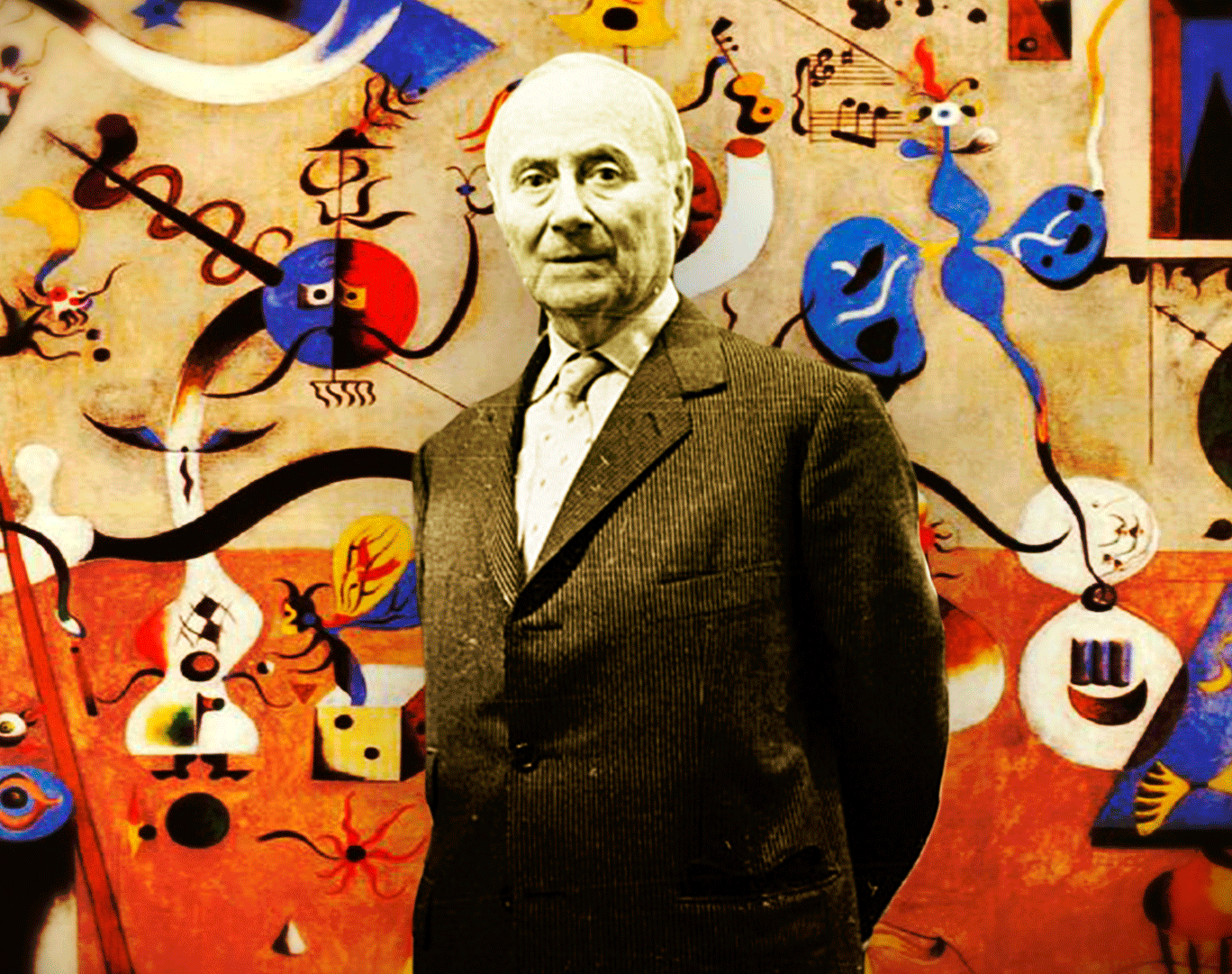
Joan Miró: The Creative Universe of a Master of Art
Joan Miró, one of the most influential artists of the 20th century, is known for his work as a painter, sculptor, printmaker, and ceramicist. Born in Barcelona in 1893, he died on December 25, 1983, in Palma de Mallorca. Miró developed a distinctive style that fused elements of Surrealism, Dadaism, and primitive art. His work encompasses a vast range of media and techniques, reflecting his insatiable curiosity and desire to explore new forms of artistic expression. In this article, we will explore Miró's career, his impact on the art world, and some of his most significant works.
The Unique and Revolutionary Style of Joan Miró
Joan Miró is celebrated for his abstract and dreamlike style, characterized by organic forms, vibrant colors, and a rich and personal symbolism. Throughout his career, Miró developed a unique visual language, often incorporating childlike and seemingly simple elements, yet imbued with depth and meaning. His paintings frequently depict a universe populated by stars, birds, and fantastical figures that appear to float in a timeless space.
Early Years and Education
Miró's artistic career began in his hometown of Barcelona, where he studied at the La Llotja School of Fine Arts and later at the Galí Academy. Influenced by the Fauvist movement and Cubism, his early works show a tendency towards realism; from this period, paintings such as "Portrait of a Vailleta" painted in 1919 and exhibited at the Fundació Miró in Barcelona or "The Farm" painted in 1922 and owned by the National Gallery of Art in Washington (USA) stand out. But he soon began to experiment with color and form in more abstract ways.
In 1920, Miró moved to Paris, where he joined the Montparnasse artists' community and befriended figures such as Pablo Picasso and André Breton. This period was crucial for his artistic development, as it was in Paris that he immersed himself in Surrealism and began to develop his distinctive style.
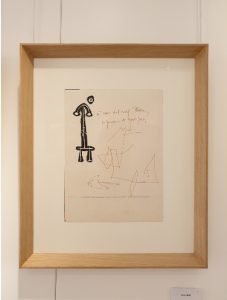
MR. AND MS. BARRES
Exploration of Media and Techniques
Throughout his career, he did not limit himself to painting. He was a tireless explorer of various art forms, including sculpture, printmaking, and ceramics. Each of these mediums allowed him to experiment with different textures, shapes, and techniques, enriching his work and expanding his artistic language.
Her sculptures, many of which are made of bronze, often feature the same abstract forms and symbolic elements as her paintings. Ceramics, meanwhile, allowed her to explore new forms of expression through color and texture, while her prints reflect her skill in working with lines and shapes in a precise and evocative way.
Significant Works by Joan Miró
Among Joan Miró's many masterpieces, some stand out for their impact and importance in the history of art. "Harlequin's Carnival" (1924-1925) is one of his best-known paintings, a surrealist work depicting a world of fantasy and play, filled with abstract figures and forms. It is currently in the collection of the Albright-Knox Art Gallery in Buffalo. "The Garden" (1925) is another emblematic work that exemplifies his dreamlike style and his masterful use of color and form. Also noteworthy is the series "The Constellations," a suite of twenty-three paintings begun in January 1940 in Varengeville-sur-Mer and completed in 1941 between Mallorca and Mont-roig del Camp.
In the field of sculpture, her "Woman and Bird" series is particularly noteworthy. These works, which combine elements of the human and avian figures, capture the essence of her symbolic language and her ability to transform materials into visual poetry.
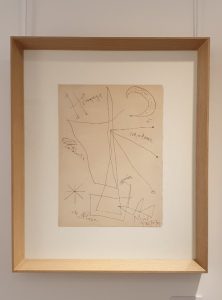
HOMAGE TO MME. ANTOINETTE
Legacy and Recognition
Joan Miró has left a lasting legacy in the art world. His influence extends across generations of artists who have been inspired by his innovative approach and unwavering creative spirit. Miró's works are found in the collections of the world's most important museums, including the Museo Nacional Centro de Arte Reina Sofía in Madrid, the Museum of Modern Art in New York, and the Tate Modern in London.
In 1975, the Joan Miró Foundation was inaugurated in Barcelona, dedicated to preserving and promoting his work. This space not only houses an impressive collection of his works, but also serves as a center for research and promotion of contemporary art.
Joan Miró is undoubtedly one of the most important figures in modern art. His work, characterized by its boundless creativity and constant exploration of new media and techniques, continues to be a source of inspiration and admiration. In an art gallery, his pieces stand out not only for their beauty and originality, but also for the depth and meaning they convey. Miró's work invites the viewer to immerse themselves in a world of imagination and see the universe with fresh eyes, appreciating the magic and mystery of artistic creation.
In our gallery, you can appreciate a selection of works of this outstanding artist. To learn more about Joan Miró, consult the website of the Joan Miró Foundation.